Axial - Observations #21
Life sciences reflections

More well thought out work can be found at — https://axial.substack.com/
Axial partners with great founders and inventors. We invest in early-stage life sciences companies often when they are no more than an idea. We are fanatical about helping the rare inventor who is compelled to build their own enduring business. If you or someone you know has a great idea or company in life sciences, Axial would be excited to get to know you and possibly invest in your vision and company . We are excited to be in business with you - email us at info@axialsprawl.com
Observations #21
A set of ideas and observations from a week’s worth of work analyzing businesses and technologies.
TEADs: controlling gene expression
Controlling gene expression has the potential to treat/cure a wide set of diseases that have a genetic component but are driven by a gene’s differential expression rather than pure gain-of-function or loss-of-function. However, tuning gene expression with drugs through targeting proteins such as transcription factors and chromatin regulators is notoriously difficult:
Pleiotropy is an important consideration - https://en.wikipedia.org/wiki/Pleiotropy
Generating selective medicines is a barrier to overcome
Fully characterizing potential protein areas to target to create more selective drugs as well as figure out ways to tune activity
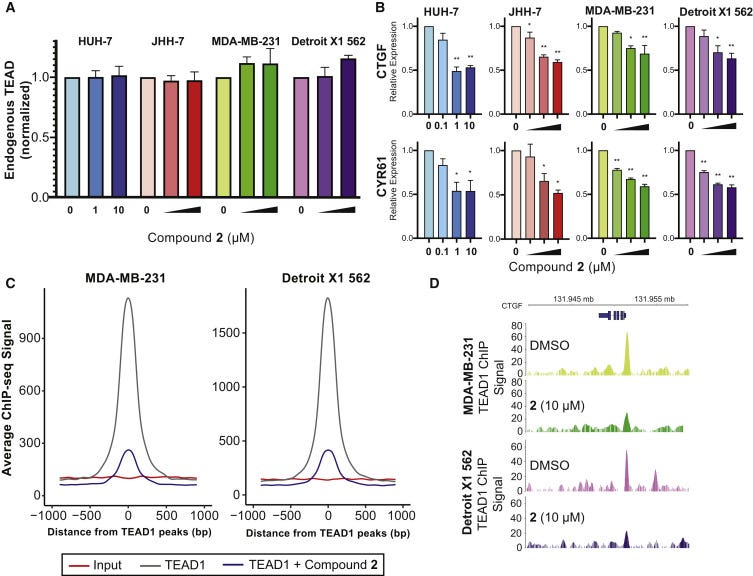
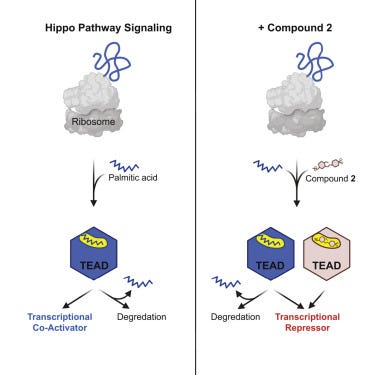
Recently, a team at Genentech published a piece of work that acts as a case study of the utility of focusing on the last point - https://www.cell.com/cell-reports/fulltext/S2211-1247(20)30790-7?sf124993285=1 The group focused on the transcriptional enhanced associate domain (TEAD) family of transcription factors. TEADs drive cellular proliferation and survival through the Hippo pathway. They discovered a small molecule that binds to TEADs disrupting a post-translational modification (PTM) to inhibit tumor growth in a mouse model:
Knowing that TEAD S-palmitoylation is important for the protein’s activity
Then they screened for and discovered a small molecule to bind TEAD’s active site and disrupt this PTM from going into the hydrophobic core of the TEAD
The key experiment (figure below) was to use biochemical tools to screen the small molecule at increasing concentrations in different cell lines while measuring 2 Hippo-dependent genes (CTGF and CYR61) - they discovered that the small molecule transformed TEAD from an activator to a repressor in a dominant-negative way
They then use a xenograft mouse model to measure the molecule’s ability to affect tumor growth
The Genentech group did some really great work here. The key lesson is that new tools particularly in proteomics are set up to transform how drugs are developed to control gene expression.
Volunteers in life sciences
There is a tension between volunteering in life sciences, for say a clinical trial, and the medical community (i.e. do no harm). This is particularly relevant for the trials for COVID-19 vaccines that require a challenge. What are the key levers to think about volunteering for clinical trials?:
Getting a treatment option earlier that had not existed before. This is probably very true for rare disease trials.
Should there be a different between trials for chronic disease versus indications like cancer and infections
Volunteering could help a patient actually get better care. They are given priority and gain access to world-class facilities. Should this be a reason to promote volunteering?
Other levers?
Mayo Clinic put out a good framework here: https://www.mayo.edu/research/clinical-trials/deciding-to-volunteer
Relevant for COVID-19: https://www.sciencemag.org/news/2020/07/controversial-human-challenge-trials-covid-19-vaccines-gain-support

It’s All About the Long Term
I was reading the first Amazon annual letter - https://www.sec.gov/Archives/edgar/data/1018724/000119312513151836/d511111dex991.htm This paragraph on gaining long-term advantages spurred the exploration of what this means in life sciences?:
Drug development - leadership for a disease or set of them (i.e. Alexion and complement-driven diseases), a tool (i.e. Regeneron and humanized antibodies), or a modality (i.e. Regenxbio and AAVs)
Diagnostics - mainly efficiency and scale (i.e. Danaher)
Synthetic biology - manufacturing capabilities
Healthcare - integration (i.e. Epic) or patient relationship (i.e. Virta Health)

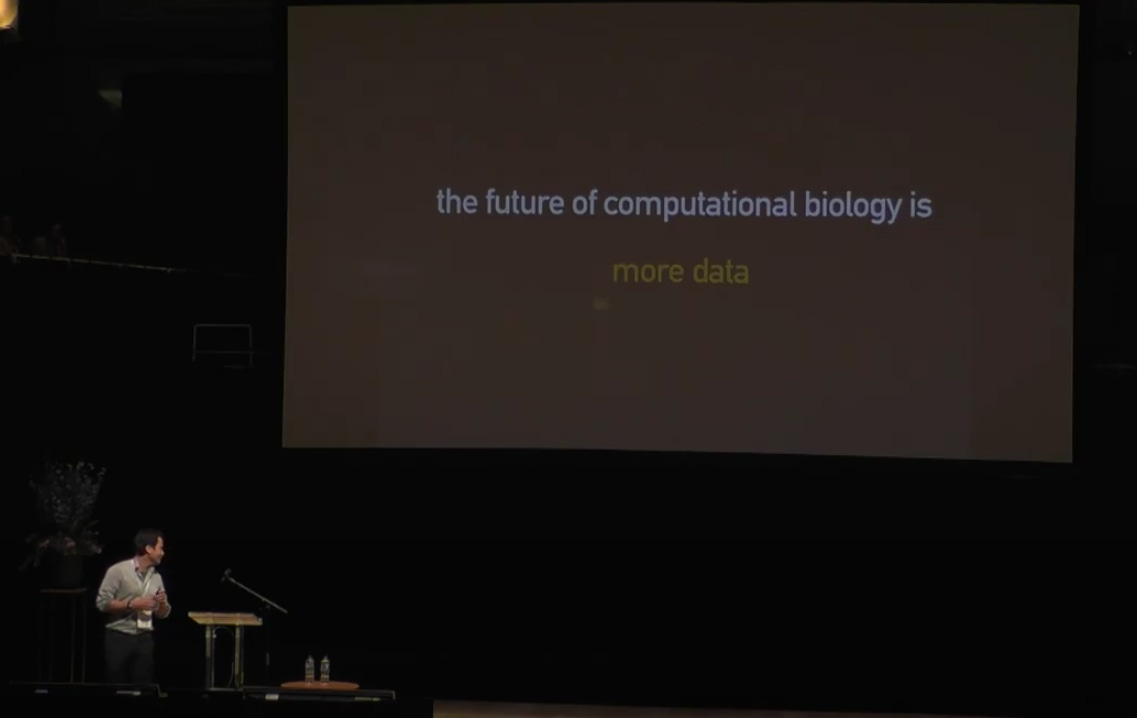
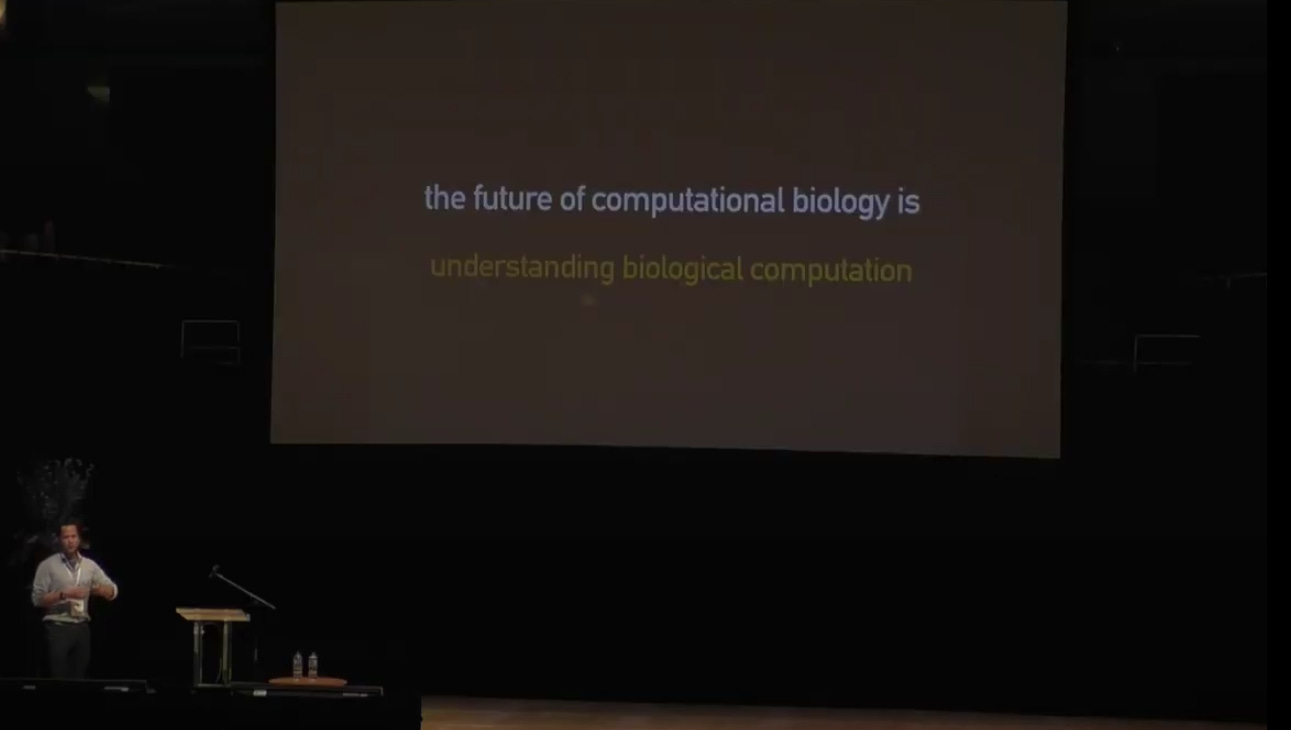
Talk on the The Future of Computational Biology
At Trinity College Dublin (famous for the What is Life? speech), Saul Kato gave a really compelling talk on computational biology with both its potential and limits -
The key discovery/point is that “structure and variability are hallmarks of a cognitive system” and the software and data have the potential to go beyond seeing systems as complex but finding function whether this is in neuroscience or beyond.